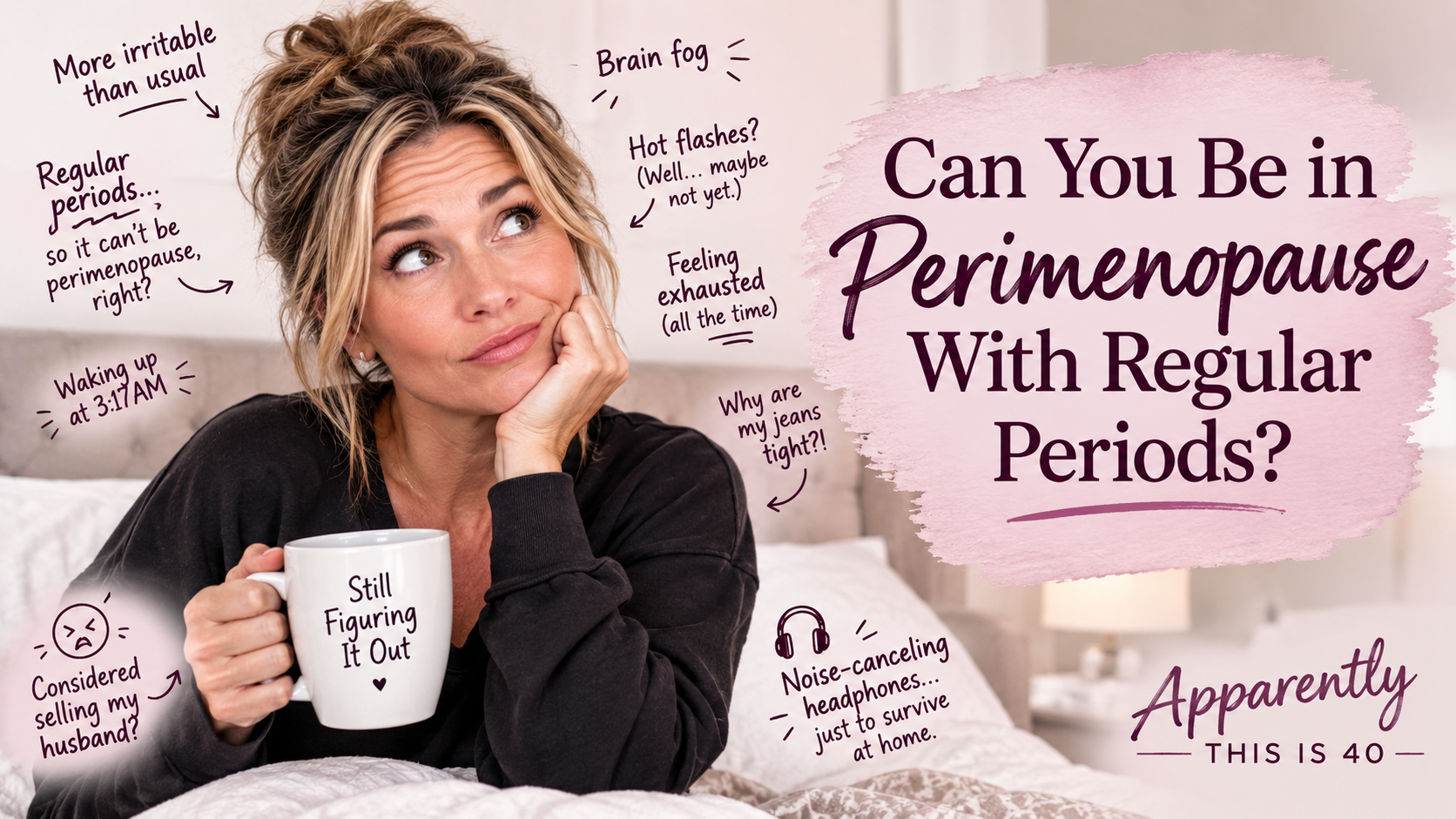
Apparently, yes.
I think a lot of us assumed perimenopause would be pretty obvious. Your periods would start getting weird, you’d have hot flashes, and eventually you’d think, Oh. This must be perimenopause.
Except apparently our bodies did not agree to make this transition convenient.
You can start experiencing symptoms associated with the menopause transition while your periods still seem regular. Menstrual changes are one of the most common early signs of perimenopause, though, so having regular periods plus a few symptoms doesn’t automatically mean you’re in perimenopause.
But maybe lately you’ve noticed some things.
You’re more irritable than usual. You’ve briefly considered selling your husband because of the way he chews. You’re wearing noise-canceling headphones around your own house because apparently everyone needs to make noise at the exact same time.
You walk into a room and have absolutely no idea why you’re there.
You wake up at 3:17 AM for no apparent reason and your brain decides this would be an excellent time to review something embarrassing you said in 2009.
You’re exhausted even though you technically slept.
And despite eating basically the same way you always have, your jeans have suddenly declared war.
Naturally, you start wondering:
What the hell is happening to me?
Then your period arrives exactly when it’s supposed to.
Well, I guess it can’t be perimenopause.
Not necessarily.
Hormones Don’t Follow a Nice Little Schedule
Hormone levels can fluctuate during the years leading up to menopause. They don’t simply decrease in a nice, predictable straight line.
As the menopause transition progresses, changes in your menstrual cycle generally become more noticeable. But your experience isn’t determined solely by whether your period showed up this month.
At the same time, this is where I think we need to be careful.
Not everything that happens to a woman around 40 is perimenopause.
Social media would have you believe that if you’re 38 and annoyed by your family, estrogen is obviously responsible.
Unfortunately, sometimes your family is just annoying.
Fatigue, mood changes, trouble sleeping, brain fog and weight changes can have plenty of other causes. Thyroid problems, iron deficiency, sleep disorders, medications, stress, pregnancy and other medical conditions can cause symptoms that overlap with perimenopause.
So the answer shouldn’t automatically be:
“You’re 40. It’s your hormones.”
We should actually figure out what’s going on.
What About Checking Your Hormones?
This part can be frustrating.
Hormone levels can fluctuate during the menopause transition. One blood draw is one moment in time, so a single hormone result doesn’t always tell the whole story.
For many women, especially those 45 and older with typical symptoms, perimenopause is identified primarily from age, symptoms and menstrual changes rather than one magical blood test.
There is, unfortunately, no lab result that pops up and says:
CONGRATULATIONS. YOU HAVE OFFICIALLY ENTERED THE WTF YEARS.
That doesn’t mean testing is never useful. Depending on your age, symptoms and medical history, your healthcare provider may order testing, particularly if something else could be causing your symptoms.
The bigger picture matters: what’s changed, how long it’s been happening, your menstrual pattern, your medical history and whether another condition needs to be ruled out.
So, Yes. Your Period Can Still Seem Regular
If you’re somewhere around 40 and suddenly don’t quite feel like yourself anymore, don’t dismiss what you’re experiencing just because your period still shows up every month.
But don’t automatically blame everything on perimenopause either.
Maybe your hormones are changing.
Maybe your thyroid needs checked.
Maybe you’re iron deficient.
Maybe you desperately need sleep.
And maybe the sound of your husband chewing really is just that annoying.
Sometimes hormones are part of the explanation.
Sometimes they’re not.
And figuring out the difference is kind of the whole point of Apparently This Is 40.
This article is for educational purposes only and isn’t a substitute for individualized medical advice, diagnosis, or treatment.
Leave a Reply